
Costa Rica is a tropical destination known for its incredible biodiversity, beautiful beaches, lush rainforests, and impressive volcanoes. Its climate is one of the country’s greatest attractions, offering warm coastal weather, refreshing mountain temperatures, and unique natural landscapes throughout the year.
Whether you are planning a beach vacation, a rainforest adventure, a wildlife excursion, or a visit to Costa Rica’s famous volcanoes, understanding the country’s weather conditions can help you choose the best time and destinations for your trip.
At Expediciones Tropicales, we help travelers discover Costa Rica throughout the year with exciting tours, comfortable transportation, and memorable travel experiences.
|
Months
|
January
|
February
|
March
|
April
|
May
|
June
|
July
|
August
|
September
|
October
|
November
|
Dicember
|
|---|---|---|---|---|---|---|---|---|---|---|---|---|
|
Temperatura Alta (C)
|
27
|
27
|
28
|
28
|
27
|
27
|
27
|
27
|
26
|
26
|
26
|
26
|
|
Low Temperature (C)
|
17
|
18
|
18
|
18
|
18
|
18
|
18
|
18
|
17
|
18
|
18
|
18
|
|
Precipitation (mm)
|
6.3
|
10.2
|
13.8
|
79.9
|
267.6
|
280.1
|
181.5
|
276.9
|
355.1
|
330.6
|
135.5
|
33.5
|
|
Average % of Sun
|
40
|
37
|
39
|
33
|
25
|
20
|
21
|
22
|
20
|
22
|
25
|
34
|
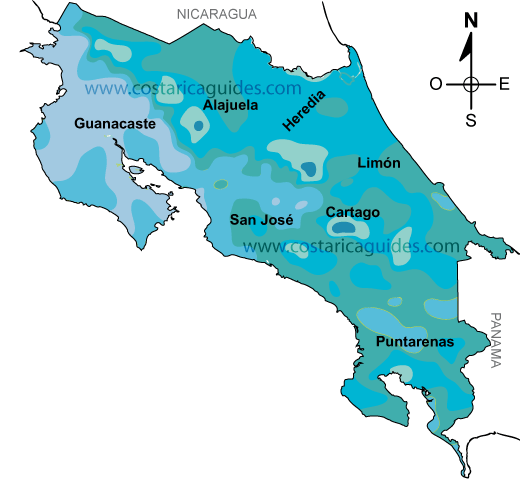
|
Annual Rainfall in Costa Rica
|
|
|---|---|
|
|
0-2000 millimeters
|
|
|
2000-3000 millimeters
|
|
|
3000-4000 millimeters
|
|
|
4000-6000 millimeters
|
|
|
> 6000 millimeters
|
Costa Rica has a tropical climate influenced by its geographical location, elevation, mountain ranges, and proximity to both the Pacific Ocean and the Caribbean Sea.
Unlike countries with four traditional seasons, Costa Rica generally experiences two main seasons: the dry season and the rainy season. However, weather conditions can vary significantly depending on the region and altitude.
Coastal destinations are generally warmer, while mountain areas such as Monteverde and the Central Valley enjoy cooler temperatures. Rainforests and Caribbean regions often experience higher humidity and rainfall.
This diversity makes Costa Rica an excellent destination for nature lovers, adventure seekers, and travelers looking to experience different environments in one vacation.
The dry season, commonly known as summer in Costa Rica, generally runs from December through April. It is one of the most popular times to visit, especially for travelers looking for sunny days, beach activities, and outdoor adventures.
During these months, the Pacific coast and Guanacaste region typically experience drier conditions, making them ideal for exploring beaches, national parks, and coastal destinations.
Popular activities during the dry season include:
Although this season is generally drier, occasional rain is still possible, particularly in mountain and Caribbean regions.
The rainy season, often called green season, usually extends from May through November. During this period, rainfall transforms the country’s forests, mountains, and countryside into vibrant green landscapes.
Mornings are often sunny or partly cloudy, with rain showers more common in the afternoon and evening, although conditions vary by location and weather patterns.
The green season is an excellent opportunity to experience Costa Rica’s natural beauty, enjoy fewer crowds in some destinations, and discover spectacular rainforest scenery.
Popular activities during this season include:
Some roads, trails, and outdoor activities may be affected by heavy rainfall, so checking local conditions before traveling is recommended.
Costa Rica’s climate changes from one region to another. Understanding these differences can help you select destinations that match your travel preferences.
The Pacific coast generally has a more pronounced dry season, particularly in Guanacaste and the North Pacific. This region is known for warm temperatures, beautiful beaches, and sunny conditions during much of the dry season.
Popular destinations include Tamarindo, Playa Flamingo, Papagayo, Jacó, and Manuel Antonio. These areas are ideal for beach vacations, sailing, snorkeling, and outdoor excursions.
The Central Valley, where San José is located, enjoys relatively moderate temperatures throughout the year due to its elevation. The weather is generally comfortable, with warmer and drier conditions during the dry season and more frequent afternoon showers during the rainy season.
San José is also an excellent starting point for exploring nearby destinations such as Poás Volcano, Irazú Volcano, coffee plantations, Cartago, and the Orosi Valley.
The Caribbean coast has a humid tropical climate and rainfall throughout the year. Unlike the Pacific coast, its weather patterns are less predictable, with relatively drier periods often occurring around February–March and September–October.
Destinations such as Puerto Viejo, Cahuita, and Tortuguero offer tropical beaches, lush vegetation, wildlife, and unique cultural experiences.
The Northern Plains, including La Fortuna and Arenal Volcano, have a warm and humid tropical climate. Rainfall can occur throughout the year, contributing to the region’s lush forests, waterfalls, and abundant wildlife.
This area is popular for hot springs, hanging bridges, volcano trails, rafting, horseback riding, and canopy tours.
Monteverde is known for its cooler temperatures, misty conditions, and high humidity. Its cloud forests create a unique environment for birdwatching, hiking, wildlife observation, and canopy adventures.
Visitors should bring a light jacket, comfortable walking shoes, and rain protection, even during the dry season.
The best time to visit Costa Rica depends on your interests, preferred destinations, and the type of vacation you want to enjoy.
December to April: A great choice for travelers seeking sunny weather, beach vacations, national parks, and outdoor activities, especially along the Pacific coast.
May to August: A wonderful period to enjoy green landscapes, tropical forests, and nature experiences. Some destinations may have fewer visitors, although weather conditions vary.
September to October: These months are often among the wettest on the Pacific side, while parts of the Caribbean coast can experience relatively drier conditions. Regional planning is especially important during this period.
November: A transition month when weather conditions can begin to improve in some Pacific destinations, although rainfall may still occur.
There is no single perfect month for every destination. Costa Rica offers different experiences throughout the year, making it possible to plan an unforgettable vacation in any season.
Packing appropriately will help you enjoy your trip regardless of the weather.
We recommend bringing:
If you plan to visit cloud forests, volcanoes, or rainforest areas, consider bringing extra layers and clothing suitable for changing weather conditions.
No matter when you decide to travel, Costa Rica offers incredible experiences in every season. From sunny Pacific beaches and impressive volcanoes to tropical rainforests and cloud forests, there is always something new to discover.
At Expediciones Tropicales, we offer a variety of Costa Rica tours, day trips, transportation services, and travel experiences to help you explore the country’s most remarkable destinations.
Whether you want to visit Arenal Volcano, discover Manuel Antonio National Park, experience the Monteverde Cloud Forest, or explore the natural attractions surrounding San José, our team can help you plan your adventure.

Web Design and Concept by CORAL